
Connect a mailbox
1
Connect Gmail
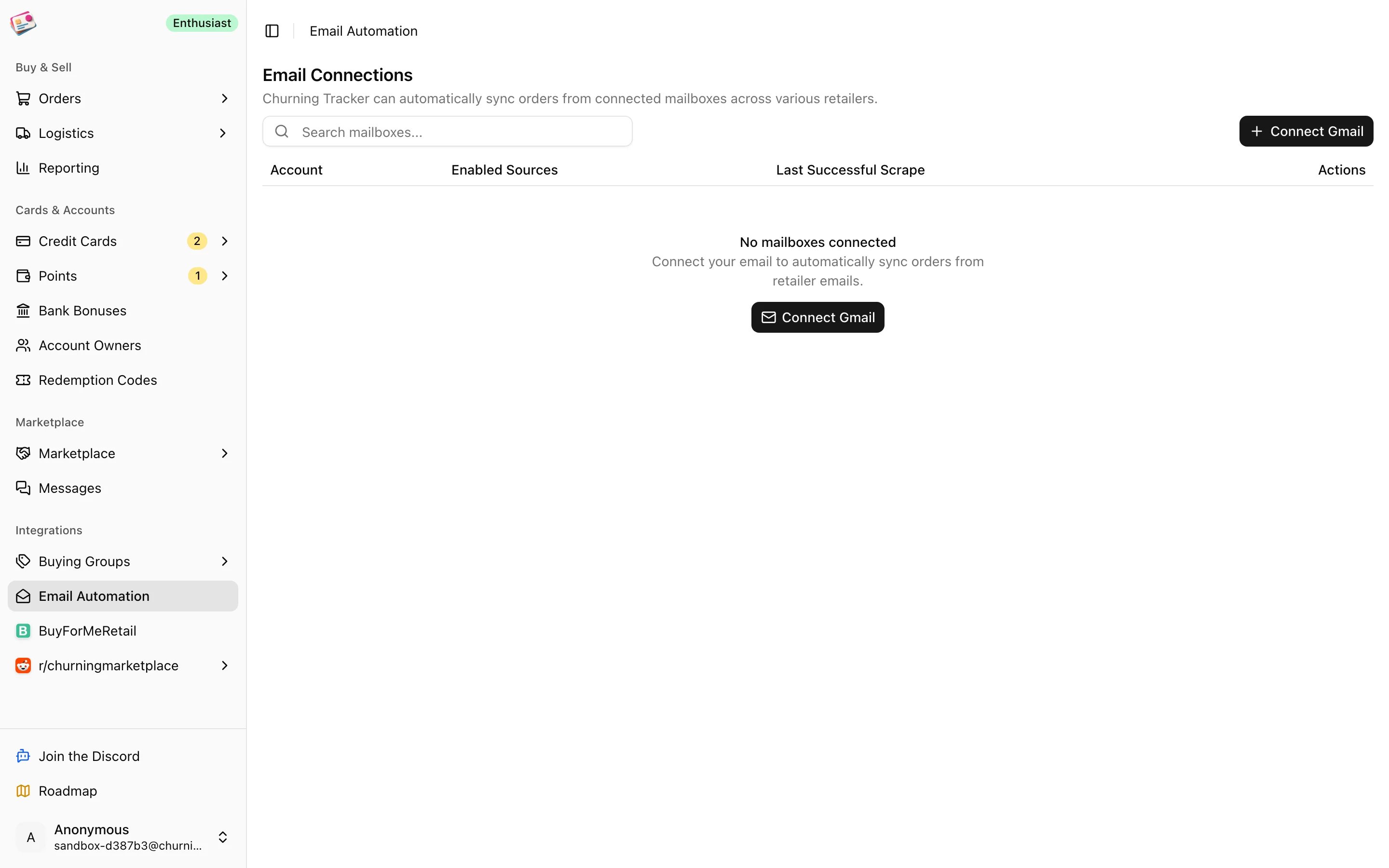
Click Connect Gmail and sign in with Google. Churning Tracker asks for read-only access to your mail. Only Gmail is supported.
2
Turn on retailers
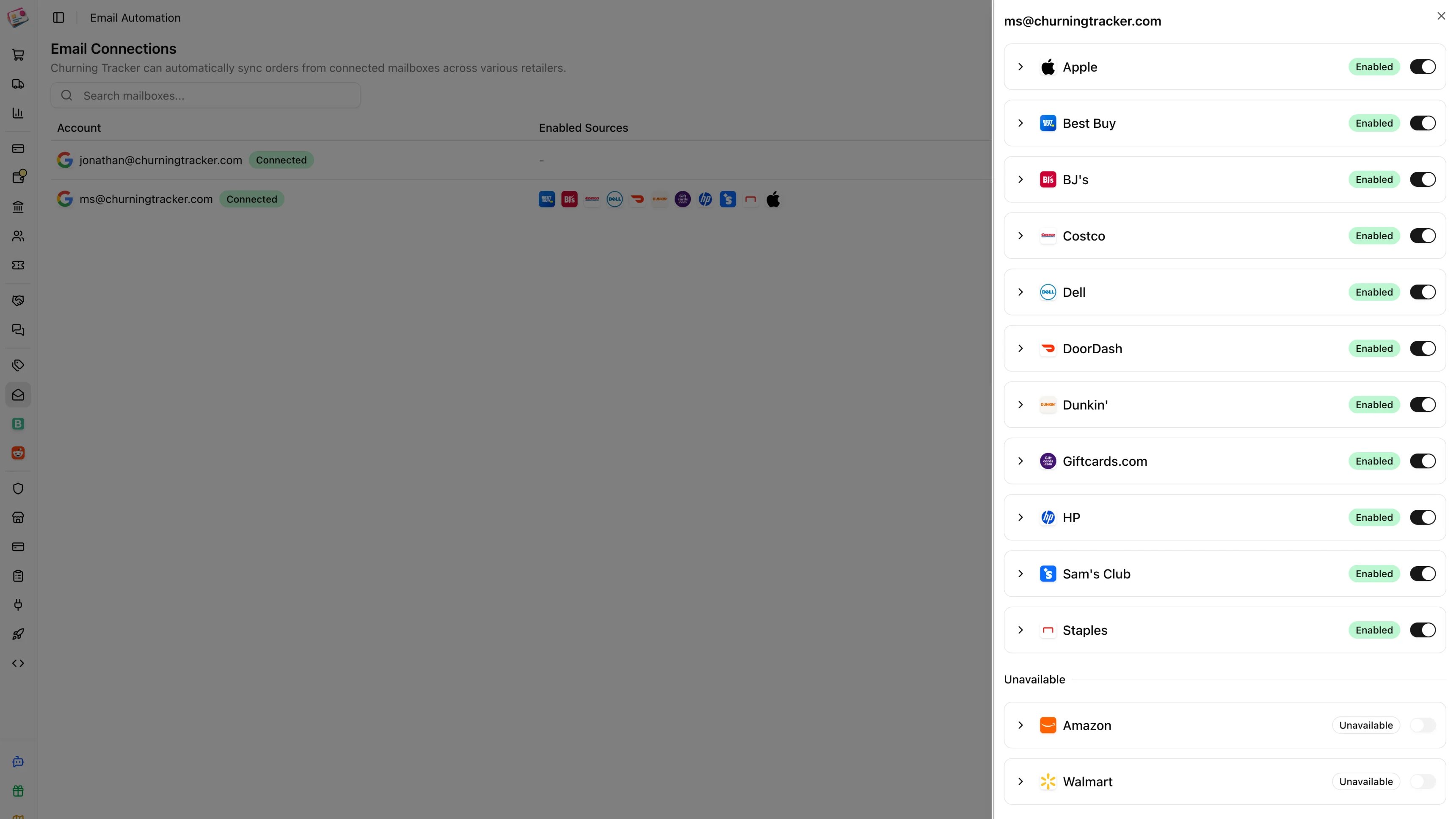
Click the mailbox to open its sources. Every retailer starts off; switch on the ones you order from.
3
Set the defaults for each retailer
Expand a retailer to choose a Default Buying Group for orders it creates (BuyForMeRetail if you leave it empty), a Default Credit Card, and whether to Infer retailer account from the email address the order was sent to. Giftcards.com asks for a default resale platform instead of a buying group.
4
Run the first scrape
Click Scrape on the mailbox row, pick the retailers, and go. A manual scrape covers the last three weeks. The first scheduled scrape afterward reaches back a year.
Forward from another mailbox
Only Gmail can be connected, but your retailer emails don’t have to land there first. Create a free Gmail account, have your existing mailbox forward retailer emails to it automatically, and connect that Gmail account here. How you forward matters. Churning Tracker finds emails by the retailer’s sender address and, for some retailers, the subject line, so the copies in Gmail need to arrive with both unchanged. Account-level forwarding in iCloud Mail and Outlook.com delivers the original message as-is. A rule that forwards in Outlook rewrites the sender to you and prefixes the subject with FW:, and those emails are never found; a rule that redirects keeps the headers. Retailer account inference still works either way, since the To address stays the one the retailer sent to.- iCloud Mail: Automatically forward email. Forwards everything, or you can forward only certain messages with a rule.
- Outlook.com: Turn on or off automatic forwarding. Forwards everything. Microsoft asks you to turn on two-step verification first.
- Outlook: Use rules to automatically forward messages. For forwarding only retailer emails. Choose Redirect to, not Forward to.
Supported retailers
Amazon and Walmart are listed as unavailable because their emails no longer include item details. Use the Chrome extension for those.
What happens to each email
- Confirmation: creates a buying group order with the status Ordered and the source Email Automation, under the retailer’s default group. The credit card is matched by the last digits in the email, falling back to the default card. The retailer account is matched to the address the email came to, when inference is on. If an order with that retailer and order number already exists, the email is skipped.
- Shipped: adds the tracking numbers to the order and moves it to Shipped. Tracking then updates on its own; see Shipments.
- Delivered: moves the order to Delivered.
- Cancelled: sets the order to Cancelled.
- Credit: adds a price-match credit to the order’s discount.
- Codes: saved under Redemption codes, skipping any you already have.