
Order types
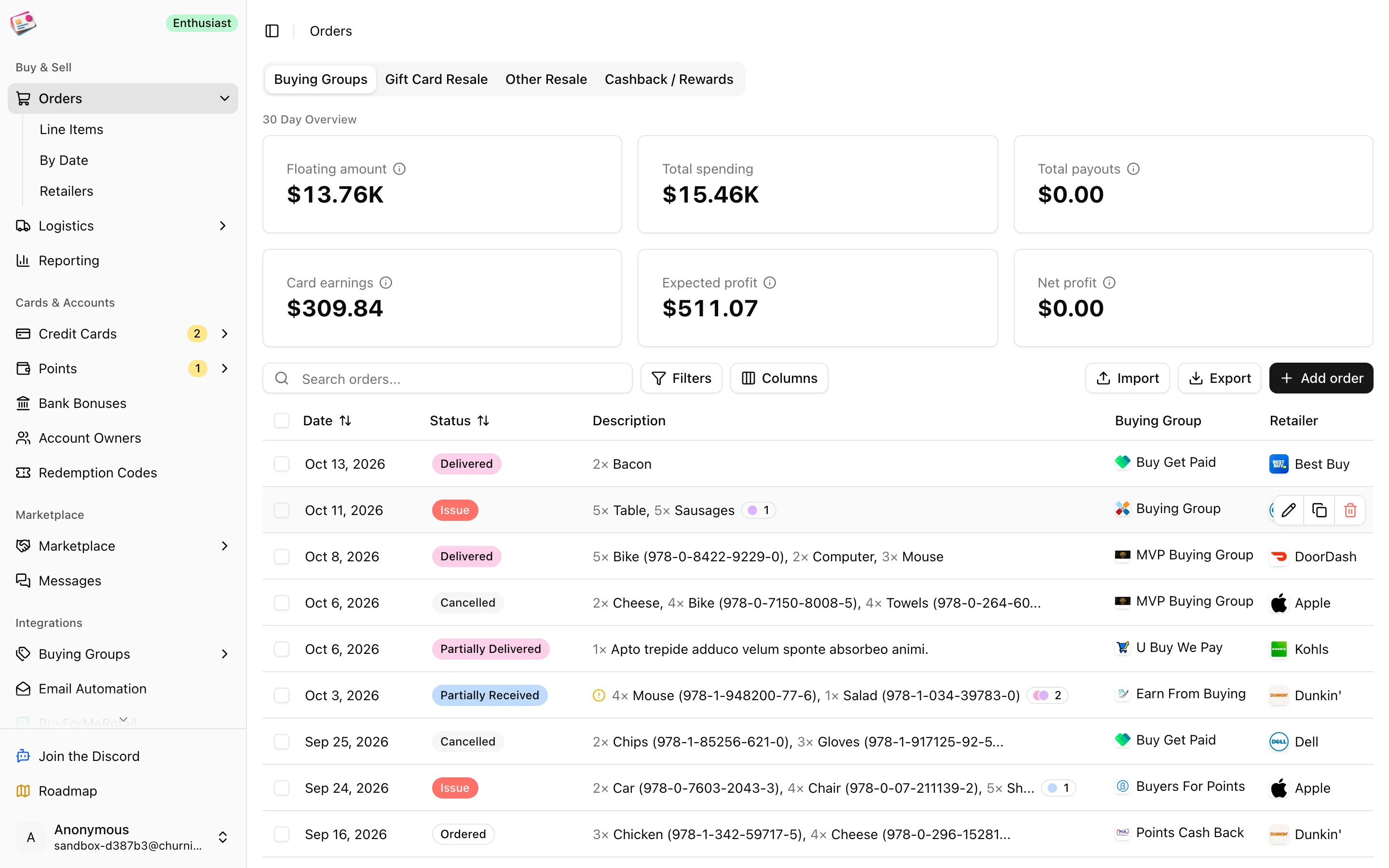
The tabs across the top switch between four kinds of order. Each has its own fields, statuses, and table.
All four share the same bones: an order date, a retailer and optional retailer account, line items with quantity and price, shipping, tax, and discount, and the credit card you paid with. Portal cashback can be attached to any of them.
Adding orders
Click Add order on any tab to enter one by hand; the type pages above walk through each form. To bring orders in from elsewhere, see CSV imports, the Chrome extension, and email automation. The Source column records which one created each order. An order is identified by its retailer and order number. Saving a second order with the same pair is rejected, and the extension and email automation update the existing order instead of creating another.The 30 day overview
The cards above the table summarize the last 30 days of orders on that tab:
Reporting shows the same numbers over any date range. The Cashback tab shows all-time counts of pending and posted rewards instead.
Working with the table
- Search matches retailer, order number, notes, line item description, and tracking number. A model number or a redemption code matches when typed in full.
- Filters cover order date, buying group or platform, status, retailer, order source, retailer account, credit card and sub-card, tags, and hiding cancelled orders.
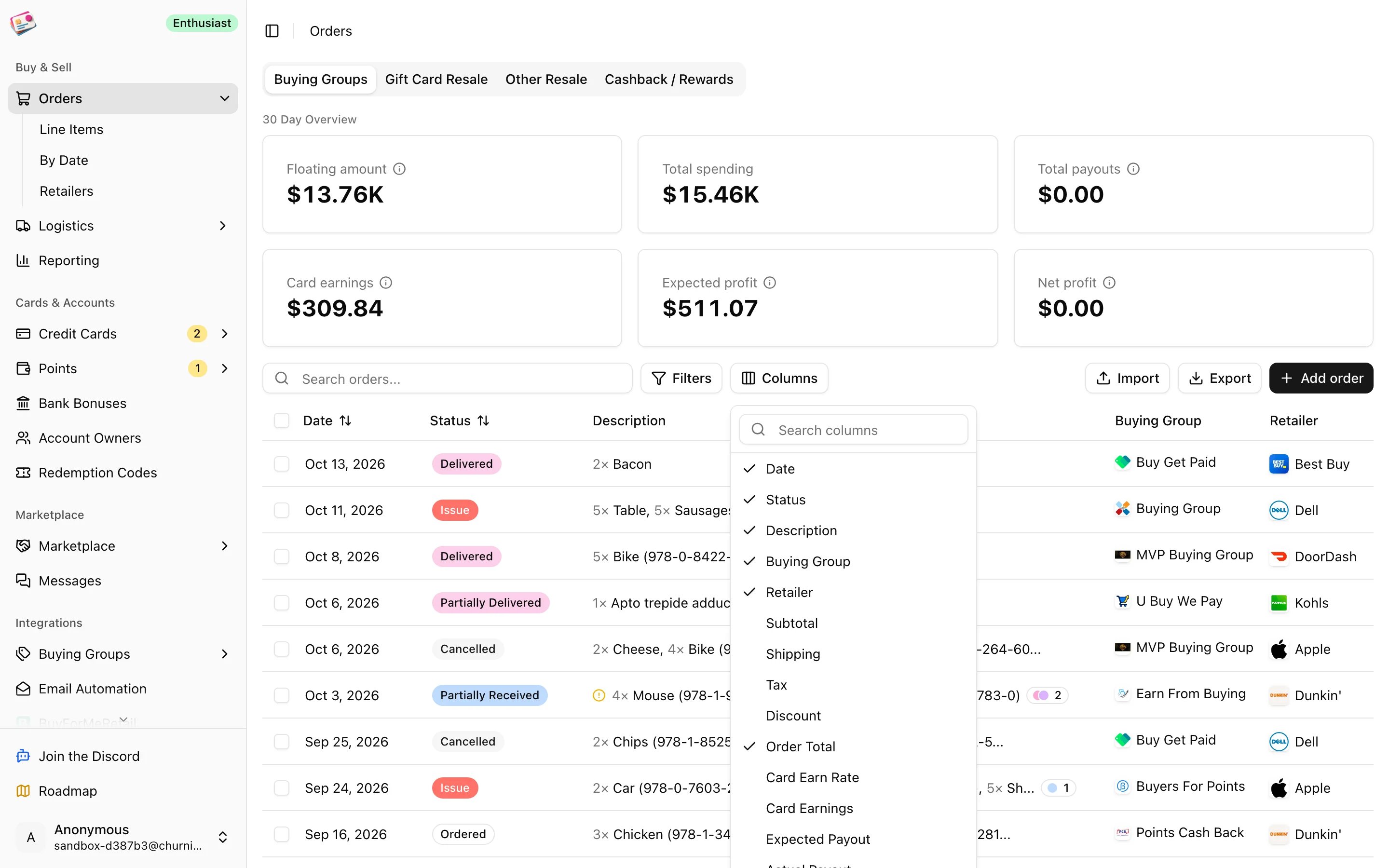
- Columns opens a picker. Many columns are hidden by default, including subtotal, tax, shipping, card earn rate, card earnings, expected and actual payout, retailer account, credit card, source, order number, tracking numbers, and notes. Money columns total at the bottom. The Show base profit switch at the bottom of the picker shows profit before card earnings and cashback.
- Inline edits: date, status, shipping, tax, discount, card earn rate, expected payout, and reward can be changed in place.
- Row actions on hover: edit, submit tracking (buying group orders with unsubmitted tracking), duplicate, delete. Duplicate opens the form pre-filled without the order number, tracking numbers, or codes.
Bulk actions
Select rows with the checkboxes and open the Actions menu. Depending on the tab you can submit tracking, update expected payouts (grouped by item, one payout per group), update tags, status, credit card and earn rate, retailer account, buying group or platform, copy tracking numbers, or delete.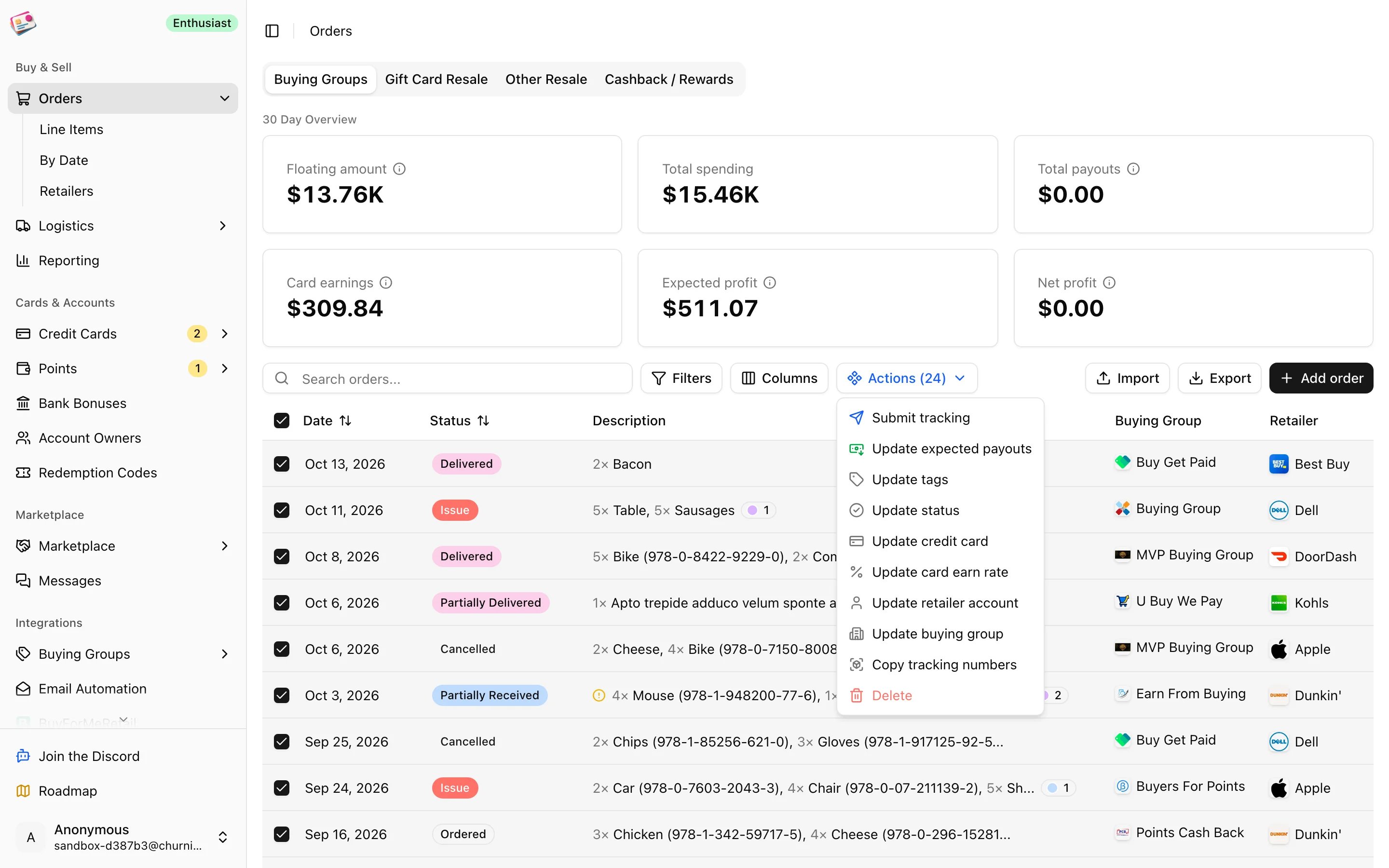
Order details
Click a row to open the details panel. From top to bottom: the header fields, tags, cashback, a cost summary with total cost and expected and actual profit, the line items, redemption codes, a full cost and earnings breakdown, payouts linked to the order, tracking numbers, attachments, and notes. Edit, Duplicate, and Delete are at the bottom.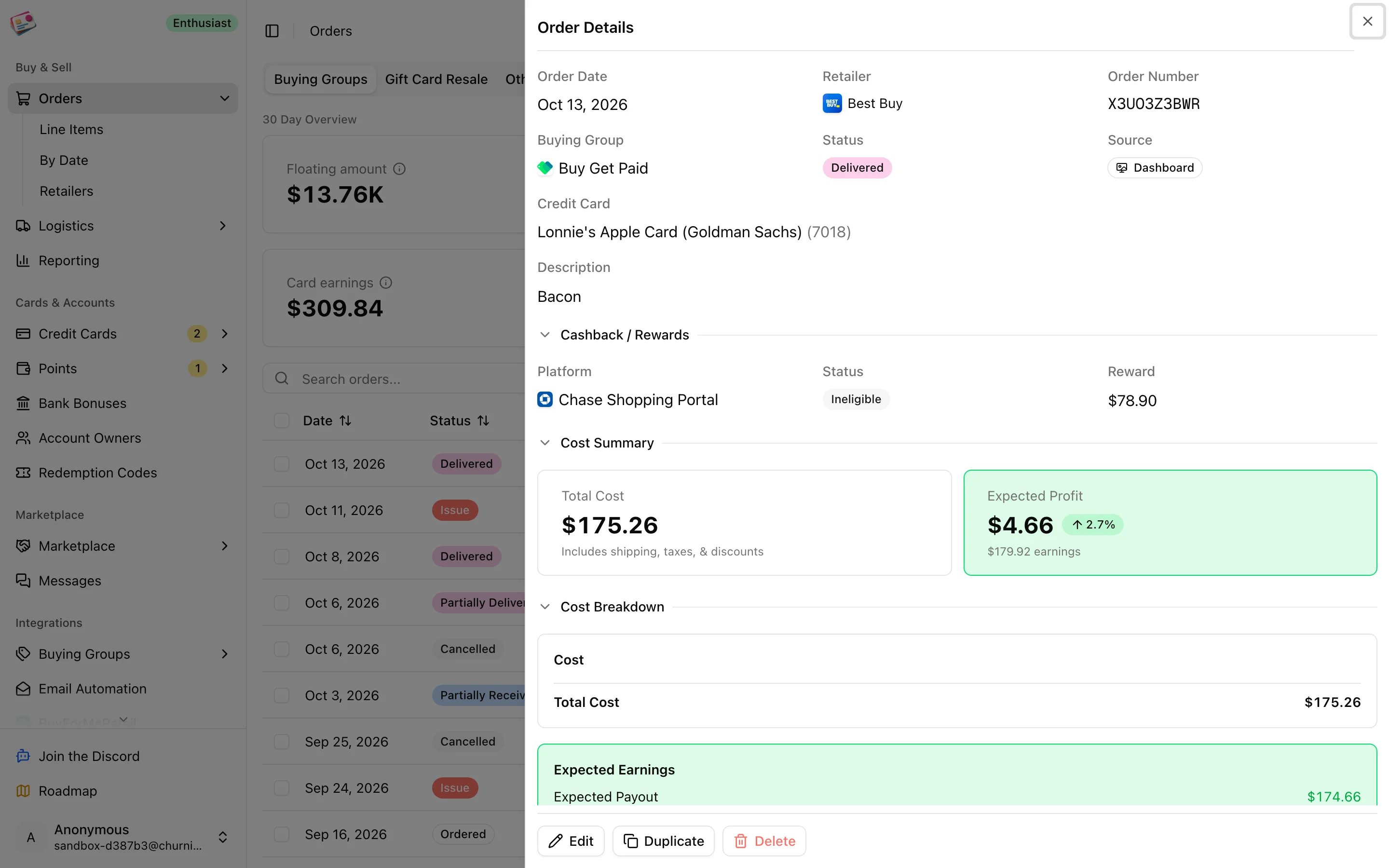
Tags, notes, and attachments
- Tags are labels you define once and apply to orders, cards, point balances, bank bonuses, and codes. Open any tag picker and choose Manage tags to create, rename, recolor, or delete them. Tags are a paid plan feature; see Plans and limits.
- Notes on an order hold up to 1,000 characters and can be edited from the table.
- Attachments: up to five files per order, such as receipts or screenshots. The section appears once the order has been saved. Images, PDFs, text and CSV, common video formats, and Office documents are accepted, up to your plan’s size limit.